Key Message: This post tackles a pervasive myth in catamaran sailing: that sidestays should be designed to break before a hull flies. We explain the flawed logic, the physics of righting moment, and why the sailor’s awareness is the most critical safety system on the water.
Author: Shayne and Anna
A dangerous piece of advice often circulates among catamaran sailors: your sidestays should be designed to break before the boat flies a hull and capsizes. This is not just a misconception; it’s a fundamentally flawed and hazardous approach to safety at sea.
In this video, we dismantle this myth and explain the real physics and practical seamanship that should guide every multihull sailor.
The Flawed Logic: “Failing to be Safe”
The core argument is logically unsound. As Shayne explains, “To have a piece of equipment fail to keep you safe is a false sense of security.” He uses a powerful analogy: “It’s like saying your car’s tires should blow out before you skid off the road around a corner. You’re introducing a catastrophic, uncontrolled failure in the name of preventing a situation that, while dangerous, can often be managed and avoided by the operator.”
A broken sidestay often leads to a dismasting, which is itself a life-threatening scenario that can cause severe injury, hull damage, and leaves the vessel disabled in challenging conditions.
The Physics: Why Heavy Cats Can Lose Their Rigs
So why does this myth persist? Because on some heavy, displacement-focused cruising catamarans, it can appear to be true. The reason lies in righting moment.
“The heavier your boat is, if it’s a catamaran, the higher the righting moment’s going to be,” Shayne states. “The higher the righting moment, the more load capability the platform can put into the stays and the standing rigging.”
For these heavy vessels, designing a rig strong enough to handle the theoretical maximum righting moment would be “enormously out of this world huge… completely impractical and very costly.” Therefore, the rig on such a boat is not typically designed for the absolute worst-case scenario, as the likelihood of reaching it is considered low.
The Reality: Sailor Responsibility is the Primary Safety System
For performance-oriented catamarans—from beach-going A-Class cats to offshore thoroughbreds like Gunboats—flying a hull is a normal and manageable part of their performance envelope.
“The ability for a boat to fly a hull and capsize is there in every boat… The managing of flying a hull is a lot easier and a lot safer than trying to manage a load in a stay to not break when you’re sailing,” says Shayne.
The key is sailor awareness. The first sign of being overpowered is the windward transom beginning to lift. This is a clear, visual cue to reduce sail. Relying on this awareness is far more practical and reliable than the vast majority of sailors who have no way to measure the actual load in their shrouds.
“It comes down to the sailor being responsible for their boat and responsible in their sailing manner,” Shayne concludes. Your eyes and your judgment are the most important safety features on board.
Want to Learn More?
A catamaran’s rigging is its backbone, transferring immense loads from the sails to the structure. In this collection, we break down the systems and hardware that make it work, from the engineering of custom carbon fiber chainplates and the servicing of hydraulic rams to the practicalities of winch selection, sail handling, and the safety protocols for working aloft. These videos provide a professional perspective on building, maintaining, and trusting your rig.
- The Art and Science of the Self-Tacking Jib: Why It’s More Complicated Than You Think
 Author: Shayne and Anna Introduction If you’ve ever spent a long day on the water tacking up a tight channel, you know the appeal of a self-tacking jib. The promise is simple: ease, simplicity, and the ability to short-hand the boat without a grinders’ pit crew on the rail. But as with anything in sailing,… Read more: The Art and Science of the Self-Tacking Jib: Why It’s More Complicated Than You Think
 - Laminating Stanchion Sockets & The Truth About Peel PlyKey Message: A successful composite lamination is defined by understanding the loads, mastering the process, and knowing the hidden details—like why you must always sand a peel ply surface before secondary bonding. Author: Shayne and Anna Introduction In the sweltering 32°C heat of the boat shed, we’re finishing the final staunchion socket on Paikea’s starboard side.… Read more: Laminating Stanchion Sockets & The Truth About Peel Ply
- Making Composite Stanchion Sockets: An Engineering Approach to Safety & Aesthetics
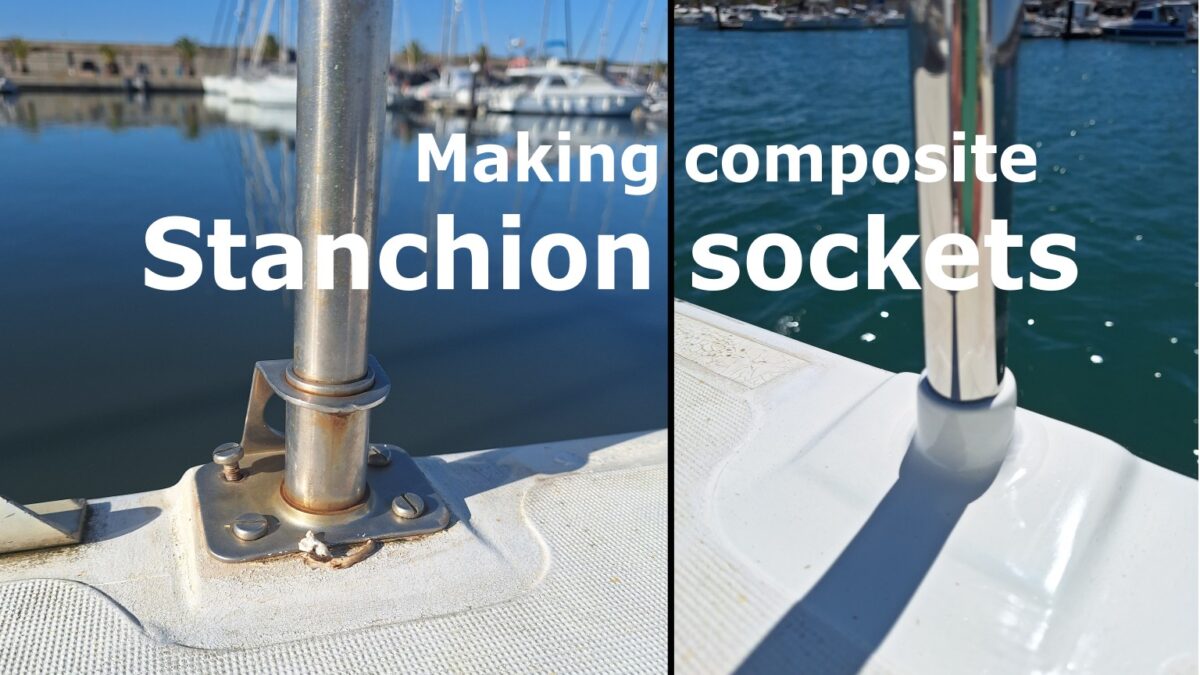
 Key Message: A successful upgrade to a critical safety system requires understanding not just how to build it, but why you choose specific materials and processes. The goal is a solution that is stronger, cleaner, and fails in a predictable, safe manner. Author: Shayne and Anna Introduction The original stainless steel stanchion bases on Paikea were functional but… Read more: Making Composite Stanchion Sockets: An Engineering Approach to Safety & Aesthetics
 - Staunchion Sockets: A Masterclass in Material Selection and Failure ModesKey Message: Choosing materials isn’t about what’s “strongest,” but about how they handle loads and, just as importantly, how they fail. A pultruded carbon spiggot might seem high-tech, but its failure mode makes it a dangerously poor choice for a lifeline system. Author: Shayne and Anna Introduction In our first post, we covered the hands-on process… Read more: Staunchion Sockets: A Masterclass in Material Selection and Failure Modes
- How to Tune Your Multihull Rigging: A Complete Step-by-Step GuideAuthor: Shayne and Anna Key Topic: Properly tuning your multihull’s rigging is a critical follow-up after replacing standing rigging. This guide breaks down the step-by-step process used by professionals to achieve a straight mast, correct pre-bend, and balanced tension, transforming a basic rig replacement into an optimized sailing system for both performance and safety. You’ve invested… Read more: How to Tune Your Multihull Rigging: A Complete Step-by-Step Guide