
Atlantic Crossing Debrief: 18 Days, 2,956 Miles, and a Lost Rudder
We’re in St Lucia. The crossing is done. Time to go through what actually happened — the good, the bad, and the parts we’re still thinking about.
This is the full debrief on our 2,700 nautical mile passage from Las Palmas, Gran Canaria to Rodney Bay, St Lucia. We left at 12:30 on the 22nd of January and arrived on the 9th of February at 12:30. Eighteen days exactly. 432 hours. We actually sailed 2,956 miles — not 2,700 — because we had to dodge a large low sitting in the middle of the Atlantic, which at one point put us within 200 miles of Cape Verde.
The Numbers
Point-to-point average speed: 6.25 knots. Speed over the course we actually sailed: 6.85 knots. Round it up to 3,000 miles at seven knots average and that tells you most of what you need to know — we were quick for a lot of it.
Best daily runs were in the 195-mile range. We’re chasing the 200-mile day as a comfortable daily average for Paikea — not pushing hard, not frightening anyone, just sailing the boat well. We’re at 165 average. There’s work to do.
The crossing was slower than we’d hoped, but not because the boat was slow. The weather was more complicated than expected, the sea state was frequently messy, and we sailed conservatively. With five people living on board including three kids, a 200-mile day is achievable — but not if nobody’s happy at the other end of it.
The Weather
We started the crossing looking for weather windows and ended it trying to get away from weather. That’s a shift in mindset that tells you something about how the passage went.
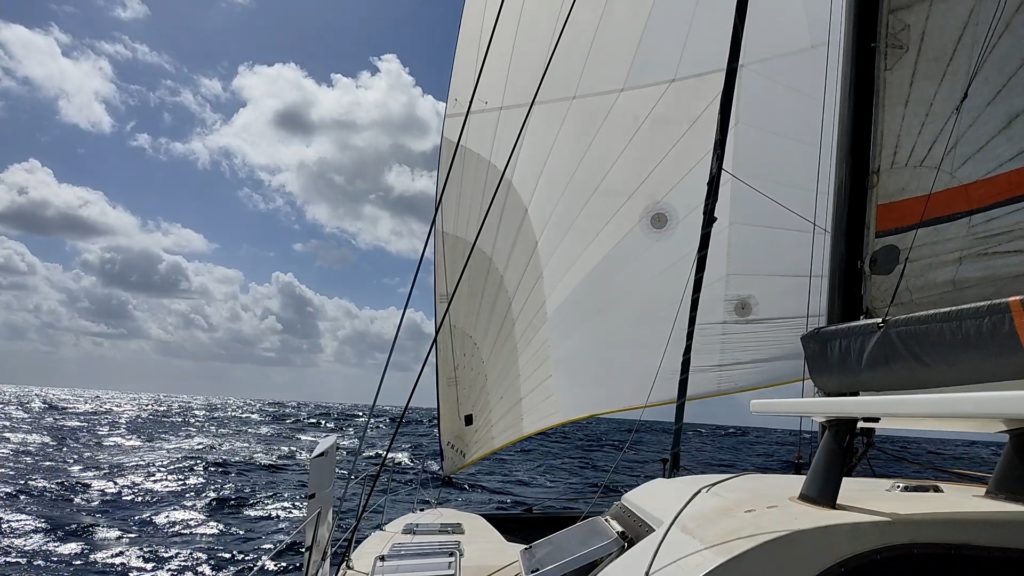
The pattern that repeated throughout: 16–18 knots during the day, building to 21–23 knots every night around 8pm. In the day, full fractional spinnaker, boat sitting on nine or ten knots, everything working well. At night, too much wind for the asymmetric, not enough sail between the spinnaker and the jib — so we’d drop to five and a half or six knots and lose all the gains from the day.
The missing sail is an A3 or screecher on a furler — something flat enough to run at night in 20+ knots, manageable by one person from the cockpit without going forward. The fractional spinnaker in a sock is a three-person operation in those conditions. The jib is too small. The gap between them cost us a lot of miles.
There was also a three-day spell of genuinely unpleasant conditions from a large low — crossed seas, ground swell running in the opposite direction to the new wind-driven swell, squally and cold, beam-on. Uncomfortable sailing. Not dangerous, but not easy.
Sail Changes and Decision Time
One of the things Shayne spent time analysing on passage — going back through logs and tracks — was how fast wind pressure fronts actually move on you, and how much time you really have to respond.
The answer: less than you think. Most of the significant wind increases happened inside a 15-minute window. The critical acceleration zone — where things actually go wrong if you haven’t acted — was often less than five minutes.
That sounds alarming, but the takeaway is practical: the decision to make a sail change is where your time starts. Not the manoeuvre itself — the moment you decide it needs to happen. From that decision you then have to clear ropes, check everything is ready, call the crew if needed, and execute. Furling the jib from decision to done: two minutes if everything is clear and ready. Dropping the sock on the fractional spinnaker: ten minutes minimum, probably more, plus waking people up.
The lesson: if you’re watching the conditions and you think a change might be coming, make the decision earlier than feels necessary. By the time it’s obvious, you’re already late.
The Scary Bit: Morocco
There were two moments on this crossing that Shayne would describe as genuinely concerning. Losing the rudder was one. The other was off Morocco.
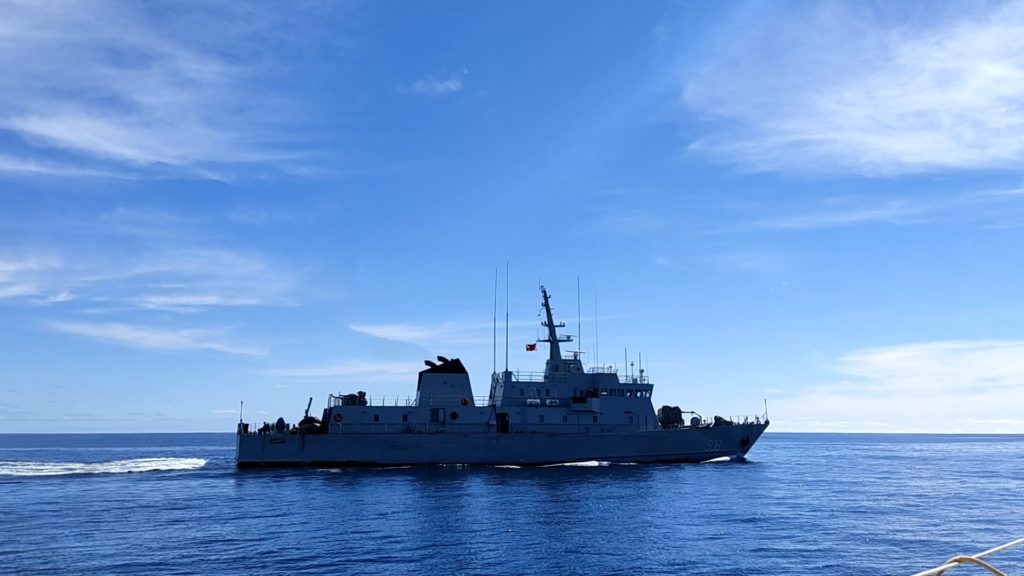
The Moroccan Navy had been with us and had asked on VHF about suspicious activity — there had been reports of piracy problems in the area in the days before we passed through. Shortly after, a small high-speed vessel appeared on the horizon heading directly toward us. Nothing we could do to outrun it. Kids on board. No good options.
Shayne called the Moroccan Navy on 16. Once he did, the approaching vessel deviated away. We then made a 90-degree turn west and motored hard for 100 miles — one of only two times the engines ran on the whole crossing.
It could have been a fishing boat. It could have been something else. The Moroccan Navy contact was what changed it. Keep channel 16 monitored and don’t hesitate to use it.
The Rudder
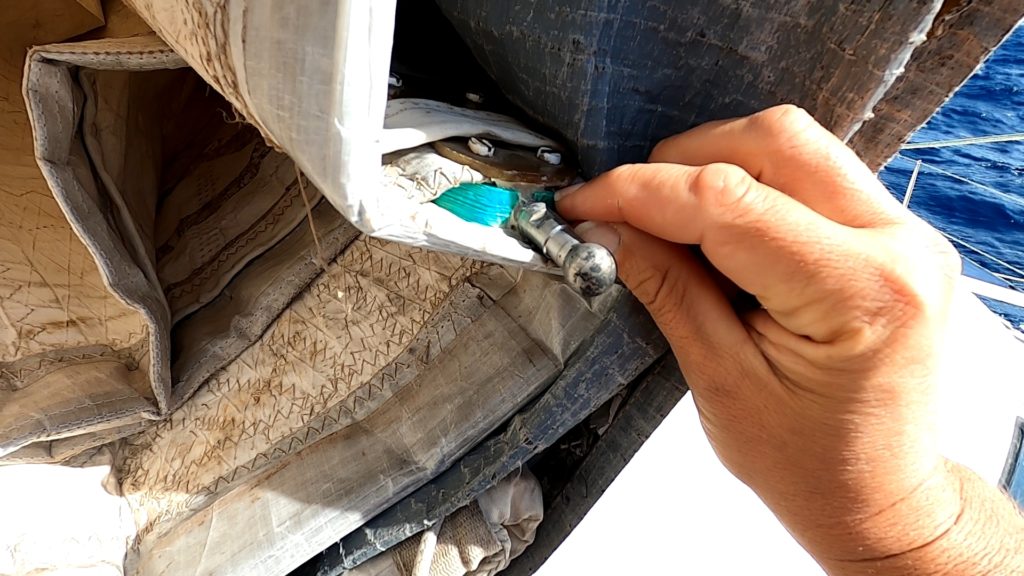
Everyone knows about the rudder. We’d put new blades on in Valencia — good blades, a real improvement in shape and performance over what was there before. But we’d reused the existing stocks because we couldn’t pull them on the low cradle in Valencia. We knew the port stock was hollow stainless. We’d inspected it, it looked fine, and we made the call to leave it.
It failed 800 miles from land. The hollow tube corroded from the inside and the wall gave way under load.
Shayne’s honest assessment: it was a surprise that it failed where it did, but not a surprise that it failed. They’d already put nearly 3,000 miles on it from Valencia. Funds were tight, logistics were difficult, and it was a calculated risk. The risk didn’t pay off.
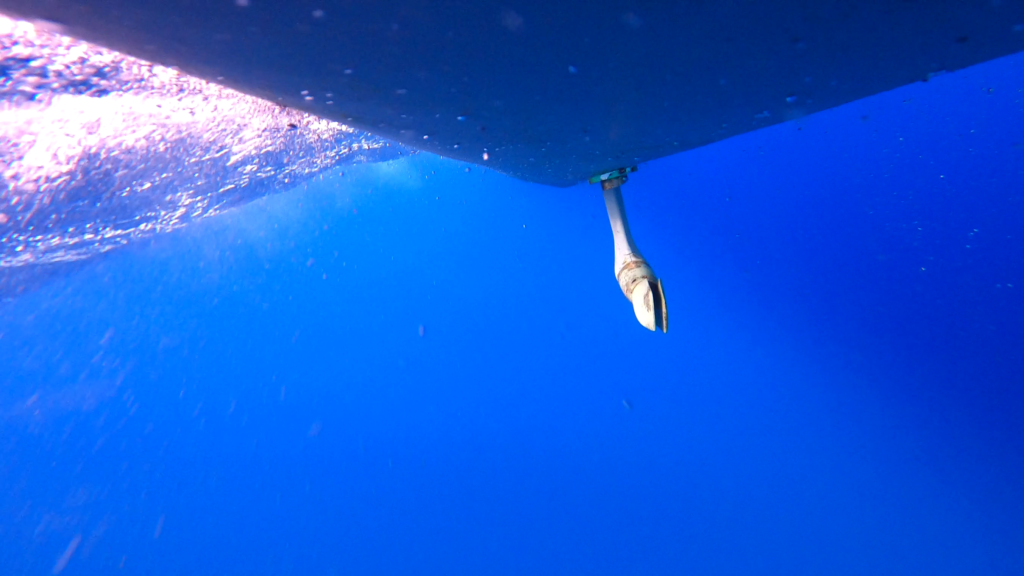
The boat sailed the remaining 800 miles on one rudder. That’s an important data point for the design of the new ones — the area and section we have is proven to be adequate as a single rudder if needed. There’s a built-in fail-safe that we now know works.
On carrying a spare rudder: the answer is no, and not just because of weight. When the rudder failed, Shayne thought through how a spare would actually be installed. The transom was moving two metres up and down in the swell. Nine tonnes of boat. A 50mm stainless shaft trying to find a 50mm hole in the hull — from underwater, in those conditions, without reliable communication with the person above. The risk of putting a 50mm hole in the bottom of the boat was too high. A spare rudder sounds like a good idea until you think through the installation.
What Worked Well
PredictWind and Iridium Go. Invaluable. The routing, the ability to modify polars from sea, the tracking so family knew where we were — and critically, when the rudder failed, the ability to update the tracking so everyone who needed to know was immediately aware. PredictWind also allowed Shayne to set routing boundaries — telling the system to keep north or south of certain marks, keeping Paikea away from the low pressure areas, and in the later stages, routing the boat so that if the second rudder went, the drift direction would take them toward St Lucia rather than away from it. Always thinking two steps ahead.
The reefing system. The spectra-covered reefing lines and the lock on the main worked well throughout. The only forward trip required was to engage the lock when putting the sail up — releasing it for reefing can be done entirely from the cockpit. That cockpit-operable philosophy — keeping the crew out of the dangerous areas as much as possible — proved its worth on a passage like this.
The A3 spinnaker. When the conditions were right, excellent.
The daggerboards. Being able to adjust board position to help balance the boat with one rudder was a meaningful tool. The ability to adapt — boards, sails, reefing — was a genuine safety asset throughout.
The head torches. Worth a mention because they made a real difference on night watches. The red light mode on the expedition torches was bright enough to trim sails by without killing night vision. The kids had Petzl headtorches which also performed well.
What Needs to Change
The missing sail. An A3 or screecher on a furler — manageable solo from the cockpit in 20+ knots. This is the priority.
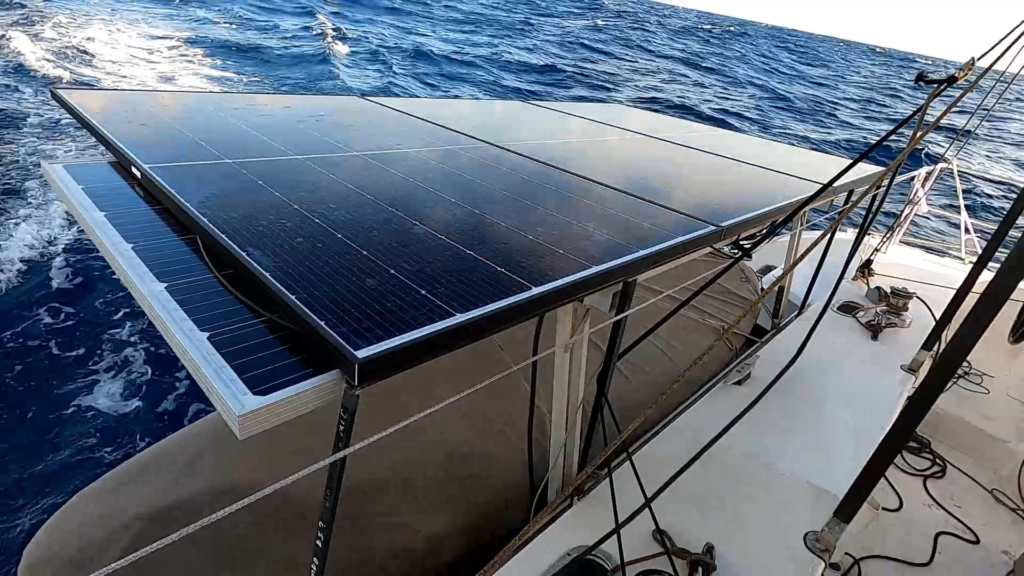
Solar shading. A significant oversight that cost meaningful power generation throughout the crossing. More panels and better placement is on the list.
Wing deck slap. The step out in the wing deck — a design compromise on the original Catana to make the step down into the hull more manageable — presents a flat bluff face to oncoming waves at speed. In certain sea states it produces a loud, repetitive bang. A chamfered fairing panel to blend the entry is the fix — not to eliminate the water contact but to change it from a bang to a rush.
Where Next
The Caribbean, and the rudder project. Carbon stocks, new blades, doing it properly this time. The winglet design is back on the table too — this crossing made the case for it more clearly than any tank test would have.
The polars work continues. The difference between a 12-day crossing and an 18-day crossing in this case came down partly to incidents, but partly to gaps in the polars at the windier end of the range. Building accurate polars — and routing off them properly — is one of the highest-value things you can do for offshore passage planning. More on that in a separate post.
In This Series
This is part of a longer story — an 11-part account of crossing from the Canary Islands to the Caribbean, including a rudder lost 800 miles from land and the recovery that followed.
Read it in order:
- The Canary Islands: Preparation for Atlantic Passage
- Discovering Chainplate Movement
- Atlantic Crossing on a Modified Catana42: Canary Islands to the Caribbean
- Mid-Atlantic Repairs and Growing Crew
- Downwind Spinnaker Trim
- Daggerboard Control, Watermaker Maintenance & Speed Secrets
- Losing a Rudder 800nm from Land
- How We Sailed 800nm With One Rudder
- We Lost a Rudder in the Middle of the Atlantic
- Navigation Systems Onboard Paikea
- Did Losing a Rudder Damage Our Hulls?
In the Members Library
If you haven’t already, start with Paikea’s Rudders: The Full Story on the free site for the complete rudder evolution. Members get behind the scenes photos and description of our Rudder Build series plus in depth video covering underwater footage and analysis of rudder ventilation.
Composite Rudder Evolution and Design →