Key Topic: Facing a firm launch deadline, we executed a coordinated final push on our catamaran’s critical systems. This involved servicing the saildrives, preparing new rudders for future winglets by installing a carbon rod backbone, and fabricating custom fairings to improve hull hydrodynamics. With a focus on engineering robust solutions—from reinforcing foils to managing a complex crane lift without a spreader bar—we successfully splashed the boat, transitioning from a major refit phase back to active cruising.
Author: Shayne and Anna
A scheduled boat launch is an immovable deadline that concentrates the mind and accelerates work in the yard. For us, it triggered a final, integrated push across multiple systems on Paikea. With a knee injury confining me to a supervisory role, this period became a masterclass in delegation and family teamwork, tackling everything from propulsion service to composite modifications.
Propulsion & Steering Systems: Service and Upgrade Prep
The core focus was on the systems that drive and control the boat. The saildrives required their second service, a job that began with the careful use of a jack to lift the engine, allowing the mounts to be manoeuvred out. Once removed, the units were cleaned, serviced, and reinstalled—a critical preventative maintenance task.
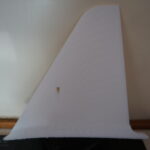
Concurrently, we initiated a performance upgrade to the steering system: rudder winglets. This required modifying our brand new rudders. Fortunately, the builder had laminated solid glass plates into the foam cores at the tips precisely for this purpose. We drilled into these plates and potted a carbon rod into each, creating a robust structural backbone. This carbon spar will serve as the primary load-bearing element for the future winglets, ensuring a strong, reliable attachment that won’t crush the core.
Hull & Foil Integration: Fairings and Reinforcements
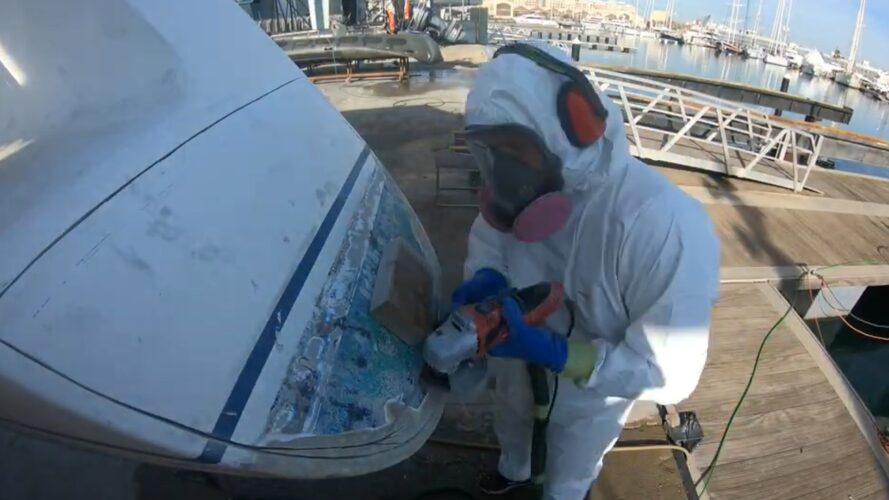
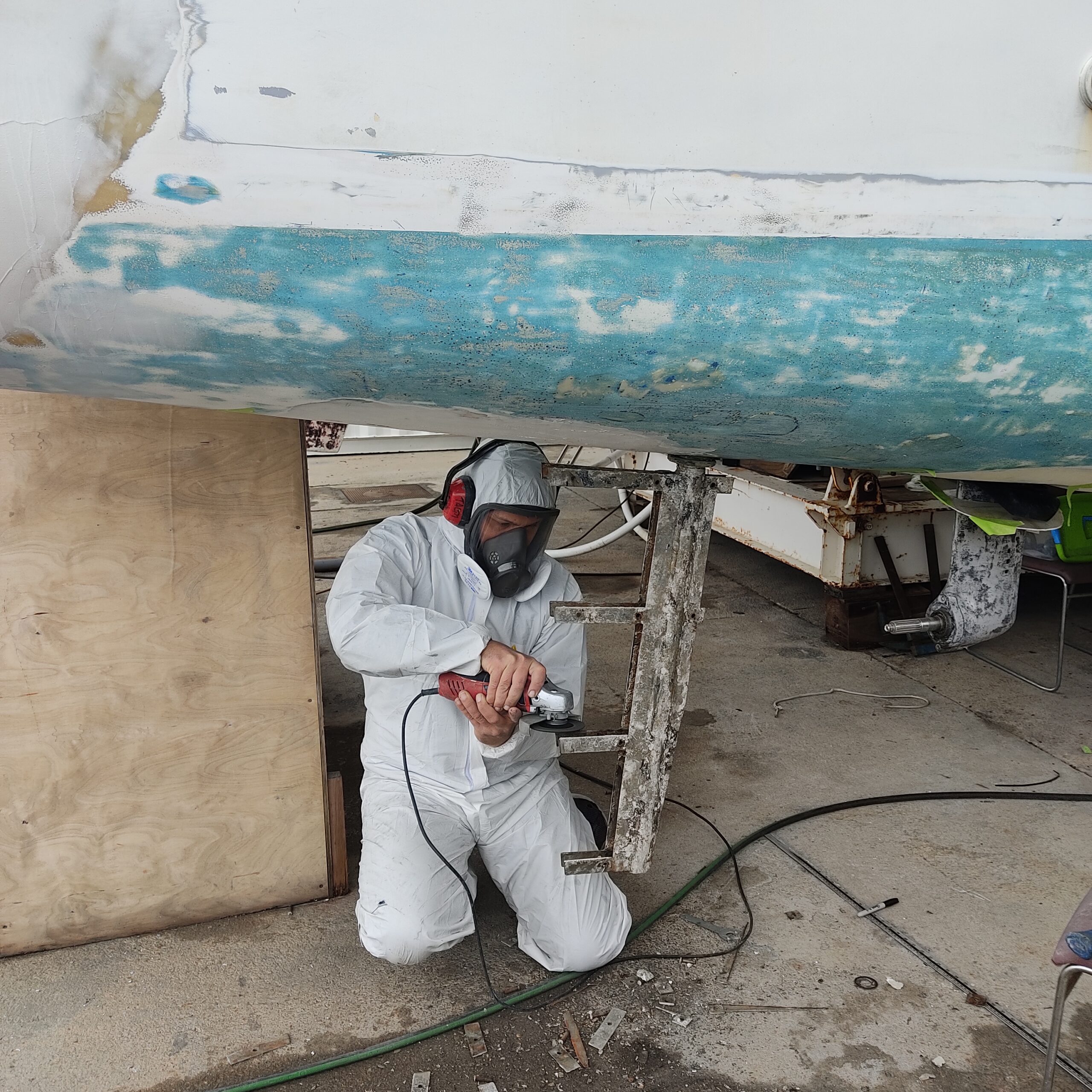
A significant source of drag on catamarans is the turbulent flow where the saildrive leg meets the hull. To address this, we designed and fabricated custom fairings. These streamlined covers bridge the gap between the hull and the saildrive leg, smoothing water flow and reducing resistance.
We also conducted a final reinforcement of the foil attachments. Additional carbon patches were laid up on the hull at the daggerboard and rudder sites. For the forward daggerboard case, we drilled through these new laminates to install a locking pin—a simple but vital safety upgrade for heavy weather sailing.
The Lift: Engineering a Safe Launch Without a Spreader Bar
The launch itself presented a unique engineering challenge. The local crane lacked a spreader bar, meaning the lifting straps would converge at a sharp angle, potentially crushing the aluminium gunwale rail.
Our solution was to distribute the load. We placed a solid block of wood between the strap and the hull, positioned directly in line with an internal bulkhead. This simple but effective measure transferred the crushing force from the fragile rail into the boat’s primary structural member, allowing for a safe and controlled lift.
Conclusion: A Successful Splash, With Work to Continue
The moment of truth arrived. After a final, midnight session ensuring the rudder mods were sealed and antifouled, Paikea was lifted and splashed without incident. A quick inspection confirmed no water was entering through the numerous new through-hulls or filled old holes—the ultimate sign of a successful haul-out.
While the list is never truly finished—the trampoline needs re-lashing and the winglets await final molding—returning to the water is a major milestone. It signifies a transition from a project in dry dock to a living, breathing vessel ready for the next phase of adventures, her systems serviced, upgraded, and prepared for the sea.
Want More on our Rudders?
- Hull Surgery: Uncovering the Truth Behind a Major Rudder Impact
 Key Message: A proper repair requires understanding the original failure. By grinding back a poor previous fix, we uncovered the full story of a major grounding and executed a permanent, structural solution that also informs our future rudder design. Author: Shayne & Anna Introduction: Uncovering a Hidden Failure During our refit, a small, suspicious repair above… Read more: Hull Surgery: Uncovering the Truth Behind a Major Rudder Impact
 - Major Hull Surgery: Transom Modifications, Fairing, and Sourcing an America’s Cup Rudder
 Executing multiple complex hull projects with a focus on structural integrity and performance gains. Author: Shayne & Anna Key Message: A systematic, professional approach allows multiple major refit projects to be run in parallel, turning a daunting workload into a series of manageable, high-impact upgrades. Introduction Transforming a boat’s hull lines is one of the most ambitious… Read more: Major Hull Surgery: Transom Modifications, Fairing, and Sourcing an America’s Cup Rudder
 - Building Rudders Designed for Wings: An America’s Cup Inspired ProjectLeveraging professional-grade components and techniques to fabricate high-performance rudders on a cruiser’s budget. Key Message: True innovation in a refit often comes from creatively repurposing existing high-performance technology and combining it with meticulous, professional fabrication techniques. Author: Shayne & Anna Introduction Replacing Paikea’s non-original and failing rudders was a top priority. While designing from scratch was an… Read more: Building Rudders Designed for Wings: An America’s Cup Inspired Project
- The Pre-Splash Push: Integrating Engine Work, Composite Rudder Mods, and Custom FairingsKey Topic: Facing a firm launch deadline, we executed a coordinated final push on our catamaran’s critical systems. This involved servicing the saildrives, preparing new rudders for future winglets by installing a carbon rod backbone, and fabricating custom fairings to improve hull hydrodynamics. With a focus on engineering robust solutions—from reinforcing foils to managing a… Read more: The Pre-Splash Push: Integrating Engine Work, Composite Rudder Mods, and Custom Fairings
- Crisis at Sea: How We Managed Losing a Rudder 800nm From LandKey Message: This post details the immediate response to losing a rudder offshore, covering crisis leadership, technical diagnosis using onboard instrumentation, and the strategic decisions that ensured a safe passage to land. Author: Shayne & Anna The moment of truth in any offshore passage comes not when things are going well, but when they go wrong.… Read more: Crisis at Sea: How We Managed Losing a Rudder 800nm From Land
- How We Sailed Our Catamaran 800 Nautical Miles With One RudderAuthor: Shayne & Anna TOPICS:This post details the emergency procedures and sailing techniques we used to safely cross the Atlantic after losing a rudder. It covers strategic use of daggerboards, sail balance for steering control, and advanced weather routing to manage an offshore crisis. Losing a rudder 800 nautical miles from land presents a sobering reality… Read more: How We Sailed Our Catamaran 800 Nautical Miles With One Rudder
- Atlantic Emergency: Managing a Rudder Failure on a Gunboat 68TOPIC:This post details a serious offshore emergency aboard a Gunboat 68, where a collision with an unknown object destroyed a rudder. It covers the immediate response, damage control, and the challenging sail to the Azores, showcasing professional-grade seamanship and problem-solving. Author: Shayne The second leg of our Gunboat 68 transatlantic delivery from Antigua to France presented… Read more: Atlantic Emergency: Managing a Rudder Failure on a Gunboat 68
- Why Our Catamaran Now Has a 23kg 3D Printer | Performance UpgradesAuthor: Shayne and Anna Key Topic: Adding a 23kg 3D printer to our weight-conscious catamaran is a strategic trade-off: the tool’s onboard manufacturing capability enables us to create custom, performance-enhancing parts like rudder winglets and solve unique marine challenges, ultimately providing more value than the weight it adds. It seems counterintuitive: we’re working tirelessly to lighten our… Read more: Why Our Catamaran Now Has a 23kg 3D Printer | Performance Upgrades