Key Message: Replacing an entire boat’s interior is a marathon, not a sprint. Hitting the halfway mark is a huge morale boost, proving the system works and the weight-saving benefits are real and tangible.
Author: Anna & Shayne
Introduction: A Major Milestone
The methodical process of replacing Paikea’s heavy timber floors with lightweight composites has reached a significant milestone: we are officially halfway through. The workflow is proven, the team is in sync, and the results are starting to physically transform the boat.
1. The Payoff: New Floors In, Weight Savings Realized
The most satisfying part of this phase is seeing the new floors installed and feeling the difference.
- Tangible Results: The first new composite floors are being fitted into the aft cabins. The contrast between the old and new is stark.
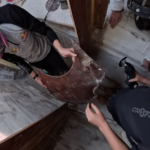
- The Weight Proof: We held up a section of the old floor—25mm plywood with 5mm of non-skid vinyl—a massively heavy piece. We have already removed over 300 kg of this material, and we’re only halfway done.
2. The Grunt Work: Demolition and Prep
While the new floors are the goal, much of the work is the unglamorous prep.
- Removing Decades of Hardware: A key task is painstakingly removing the many old, seized screws that held the original floors and cleats in place for over 35 years.
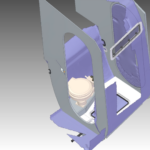
- Complex Geometry: The areas around the daggerboard case present the most complex templating and fitting challenges, requiring careful work to ensure a perfect structural fit.
3. The Workflow: A Family Assembly Line
The project continues to be a team effort, with parallel tasks moving the refit forward efficiently:
- Floor Fabrication & Installation: Continuously templating, infusing, and fitting new floor panels.
- Systems Work: Rerouting and soldering the engine wiring loom for a cleaner, more reliable installation.
- Site Prep: Clearing and preparing each area for its new floor, which includes the tedious job of old screw removal.
Conclusion: Momentum for the Second Half
Reaching the midpoint is a powerful motivator. The process is no longer theoretical; the new floors are in, the boat is already hundreds of kilos lighter, and the path to the finish line is clear. The momentum we’ve built will carry us through the second half of this transformative project.
See More of our Structural Floor Build.
- Solving Boat Shower Drainage with Cardboard, CAD, 3D Scanning & 3D Printing
 The Hybrid Design Workflow: Building a Boat Shower Floor with Cardboard, CAD, and 3D Scanning: Walk through the hybrid design process for a custom boat shower floor. See how cardboard prototyping, CAD, 3D scanning, and 3D printing combine to solve complex drainage and access problems in a marine refit. Author: Shayne and Anna Introduction Designing… Read more: Solving Boat Shower Drainage with Cardboard, CAD, 3D Scanning & 3D Printing
 - The Boat Shower Floor Blueprint: Drainage, Hatches & Avoiding Bilge FloodsWhen your floor needs to drain, provide access, and never flood the bilge. A deep dive into the logic behind our custom shower hatch. Key Topic: Join Shayne & Anna in the bilges for a marine design deep-dive. We’re solving the boat shower’s trickiest puzzle: creating a floor that drains properly, includes mandatory access hatches,… Read more: The Boat Shower Floor Blueprint: Drainage, Hatches & Avoiding Bilge Floods
- Diagnosing and Repairing Hull Delamination and Core Damage.The Problem: From Floor Installation to Structural Repair Author: Shayne and Anna During the installation of new cabin soles in our Catana 42 refit, a routine task uncovered a significant structural issue. The discovery process is a textbook example of why systematic disassembly is critical. Initial Indicators: The Technical Failure:In a cored composite structure (like… Read more: Diagnosing and Repairing Hull Delamination and Core Damage.
- Re-Engineering a Hull: Load Paths, Daggerboards, and a New Structural BulkheadAuthor: Shayne and Anna Key Message: The most important part of a structural refit is understanding and optimizing load paths. By relocating a bulkhead to align with the strongest part of the daggerboard foil, we significantly increase Paikea’s structural integrity and sailing performance. Introduction: Identifying a Structural Flaw During Paikea’s refit, we noticed a discrepancy. On… Read more: Re-Engineering a Hull: Load Paths, Daggerboards, and a New Structural Bulkhead
- Refit Progress: Templating, Infusing, and Building a New Laminating TableKey Message: A major refit is a series of small, repetitive, and precise steps. By creating a family “assembly line” for templating and infusion, we’re efficiently producing lightweight, custom composite floors while constantly improving our workshop tools. Author: Anna & Shayne Introduction: The Flooring Assembly Line The transformation of Paikea’s interior continues, one floor panel at… Read more: Refit Progress: Templating, Infusing, and Building a New Laminating Table