Author: Shayne and Anna
Topic: This post provides a professional analysis of an Atlantic upwind passage, demonstrating the Catana 42 Paikea’s performance capabilities with real-time data on wind angles and boat speed. It details the immediate emergency response to a sudden structural bang at sea, outlining the systematic procedure for inspecting daggerboards and hull integrity. The article also reflects on recent upgrades that enabled a successful ocean crossing, balancing performance validation with the practical realities of managing crew and vessel systems offshore.
Introduction
Open ocean passages provide the ultimate testing ground for both vessel and crew. This account details a demanding upwind leg from the Azores toward Gibraltar, where we pushed our modified Catana 42, Paikea, to evaluate her performance envelope while dealing with the inevitable realities of offshore sailing—from seasickness to unexpected structural concerns.
1. Performance Under Pressure: Data-Driven Upwind Analysis
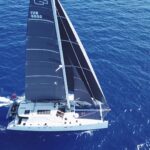
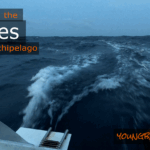
Contrary to popular belief, a well-configured cruising catamaran can be a competent upwind performer. During this passage in 15-20 knot conditions, Paikea demonstrated impressive numbers:
- Boat Speed: Consistently 7-9 knots upwind
- True Wind Angle (TWA): Holding 46-50 degrees
- Apparent Wind Angle (AWA): 30 degrees, creating 19-20 knots apparent wind over the deck
- Comparative Performance: Effectively overtaking a 40-foot monohull by pointing higher and moving faster
These results validate the modifications to Paikea’s sail plan and underwater foils, proving that strategic upgrades can transform upwind capability.
2. The Reality of Offshore Life: Crew and Vessel Management
Beyond the numbers lies the human and practical element of passagemaking:
- Crew Welfare: Managing seasickness among both human and feline crew members
- Saltwater Ingress: Coping with pervasive saltwater penetration throughout the vessel
- Watch Systems: Maintaining navigation and vessel monitoring despite challenging conditions
- Comfort vs. Performance: Balancing boat speed against crew comfort in building seas
3. Emergency Response: Investigating a Structural Bang
The passage took a serious turn when a loud bang echoed through the hull—every sailor’s dreaded sound offshore. Our immediate response followed professional protocol:
Assessment Procedure:
- Immediate Evaluation: Determining the general location and severity of the sound
- Systematic Inspection: Checking rudders, saildrives, and hull integrity
- Daggerboard Investigation: Using halyards to carefully raise the starboard daggerboard for visual inspection
- Secondary Checks: Examining all potential impact points, including wing deck steps and storage boxes
The investigation revealed no catastrophic failure, likely indicating a wave impact on the wing deck structure. However, the event underscores the importance of having emergency procedures firmly established before offshore departures.
4. Atlantic Crossing Context: Recent Upgrades Proving Their Worth
This passage continued a successful Atlantic crossing made possible by recent critical upgrades:
- New Carbon Chainplates: Replacing failing stainless steel originals
- Asymmetric Rudder Configuration: Sailing with one new and one original rudder after running out of time for complete replacement
- Weight Reduction: Removing 150kg significantly improved light-air performance
- Sail Inventory Optimization: New headsail and spinnaker configurations delivering 210nm downwind days
These modifications have fundamentally transformed Paikea’s ocean-going capabilities, though the daggerboard incident reminds us that ongoing maintenance and inspection remain paramount.
Conclusion
Offshore sailing consistently presents a balance between pushing for performance and managing risk. Paikea’s demonstrated upwind capability validates our technical approach, while the emergency assessment highlights the importance of prepared response protocols. As we continue toward Gibraltar, we do so with increased confidence in our vessel’s capabilities and our ability to handle the unexpected at sea.
Want to See More Sailing?
- A Privileged View: Showcasing the Iconic Gunboat 66 “Outnumbered”
 Author: Shayne & Anna As liveaboard sailors and marine professionals, we’re constantly surrounded by beautiful boats. But every so often, we encounter a vessel that is truly special—an icon that stops you in your tracks. The Gunboat 6602, “Outnumbered,” is one of those boats. We’ve been entrusted with a unique task: caring for this legendary performance… Read more: A Privileged View: Showcasing the Iconic Gunboat 66 “Outnumbered”
 - Offshore Reality Check: Performance Analysis and Emergency Assessment Mid-AtlanticAuthor: Shayne and Anna Topic: This post provides a professional analysis of an Atlantic upwind passage, demonstrating the Catana 42 Paikea’s performance capabilities with real-time data on wind angles and boat speed. It details the immediate emergency response to a sudden structural bang at sea, outlining the systematic procedure for inspecting daggerboards and hull integrity. The article… Read more: Offshore Reality Check: Performance Analysis and Emergency Assessment Mid-Atlantic
- Ocean Passage Engineering: Systems Analysis and Arrival Planning 40 Miles OffshoreTopic: 40 miles from the Azores after a 14-day Atlantic crossing, we handle mid-ocean gear failure while planning our next jib sheeting system upgrade. This professional analysis covers block replacement, floating ring technology, and track system design for optimal sail control, demonstrating how continuous improvement integrates with routine offshore sailing. We combine practical repair work with… Read more: Ocean Passage Engineering: Systems Analysis and Arrival Planning 40 Miles Offshore
- 30-Knot Atlantic Sailing: Performance Analysis and 17-Knot SurfTopic: Author: Shayne and Anna Introduction The midpoint of an Atlantic crossing often brings the most challenging conditions, and our passage to the Azores delivered 30-knot winds and building seas. These conditions provided the ultimate test of Paikea’s heavy-air capabilities and our family’s offshore systems, from spinnaker management to performance diagnostics in demanding ocean conditions. 1.… Read more: 30-Knot Atlantic Sailing: Performance Analysis and 17-Knot Surf
- How to Reef a Catamaran Downwind: A Practical GuideKey Message: Practical Skills for Real-World SailingReefing is a fundamental skill, but doing it effectively while sailing downwind on a catamaran requires specific techniques. This guide, filmed in 16 knots of breeze on our Atlantic crossing, breaks down the practical process of reefing a mainsail controlled by a halyard lock and a sticky track. We… Read more: How to Reef a Catamaran Downwind: A Practical Guide
- Offshore Reality: Light Air Performance, Wind Speed Myths, and Systems Management Mid-AtlanticAuthor: Shayne and Anna Topic: This post provides a professional analysis of an Atlantic crossing focused on light-air performance optimization. It details the practical challenges of managing daggerboards, watch systems, and spinnaker configuration with a family crew, while delivering a critical technical examination of the “wind speed boat” myth. The article contrasts real-world performance data with common… Read more: Offshore Reality: Light Air Performance, Wind Speed Myths, and Systems Management Mid-Atlantic
- How to Trim a Jib on a Catamaran: A Pro’s Guide to Speed & PointingKey Message: Beyond the Winch HandleTrimming a jib on a performance catamaran is an engineering discipline, not a guessing game. It requires a systematic approach to sail shape, driven by an understanding of aerodynamics and boat dynamics. This guide, drawn from America’s Cup and Volvo Ocean Race protocols, will show you how to move beyond… Read more: How to Trim a Jib on a Catamaran: A Pro’s Guide to Speed & Pointing
- Designing a Bulletproof Reefing System: A Professional BreakdownWe can reef at any time, in any conditions at any point of sail Key Message: Engineering for Reliability, Not Just FunctionA reefing system is a primary safety feature, yet many are plagued by jamming cars, chafed lines, and poor sail shape. On our catamaran Paikea, we’ve engineered a system that eliminates these failures. This… Read more: Designing a Bulletproof Reefing System: A Professional Breakdown
- Wild 17.8-Knot Sled Ride Ends with a Torn SpinnakerKey Message: A four-hour deadline to cross Antigua for a birthday party turned into a wild downwind sled ride for our family. Pushing our catamaran, Paikea, in fresh trade winds, we hit 17.8 knots while battling a major handicap: sailing with only one rudder. The thrilling speed came at a cost, as a bad gybe… Read more: Wild 17.8-Knot Sled Ride Ends with a Torn Spinnaker
- How We Sailed Our Catamaran 800 Nautical Miles With One RudderAuthor: Shayne & Anna TOPICS:This post details the emergency procedures and sailing techniques we used to safely cross the Atlantic after losing a rudder. It covers strategic use of daggerboards, sail balance for steering control, and advanced weather routing to manage an offshore crisis. Losing a rudder 800 nautical miles from land presents a sobering reality… Read more: How We Sailed Our Catamaran 800 Nautical Miles With One Rudder