Paikea’s Interior Refit: Why We’re Lightening a 30-Year-Old Catamaran
The interior refit was always the plan. Paikea’s timber floors and furniture were original to a 30-year-old boat, and replacing them with lightweight foam and glass had been decided well before we hauled out in Barcelona — this was never a project that started by accident or in response to a single problem.
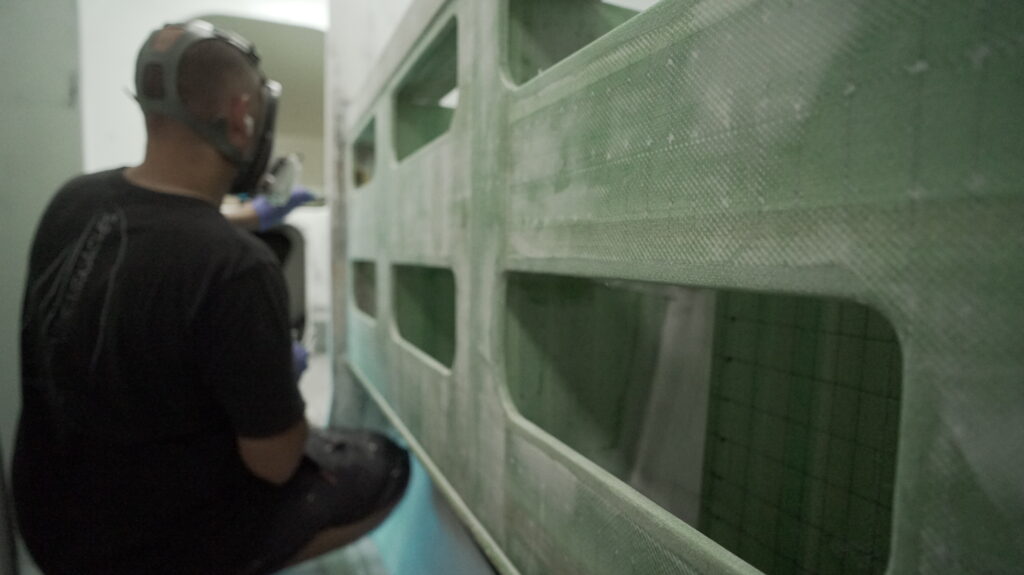
What did happen at that haul-out was a genuine forcing function: a block had been mounted in the wrong place on the starboard hull, and the load through it over the years had opened up a crack. Shayne already knew the spot needed attention; the crack just meant it couldn’t wait any longer. It’s a real repair, and it’s covered in its own posts, but it’s a footnote to this story, not the headline. The real substance of this refit is everywhere else — every bulkhead cut into and rebuilt, every floor and door and piece of furniture replaced, and the engineering reasoning behind every one of those decisions.
This is one part of the wider story — for the full picture of everything that’s gone into bringing Paikea back to spec, see Paikea’s Refit.
Why Light Matters on a Cruising Boat
It’s a fair question whether any of this is worth the effort, and it gets a proper answer in Can You Make a Catamaran Too Light? The Real Answer. The short version: individual components can be too light for their job, but a cruising boat as a whole generally can’t be, because sail area is adjustable and gear is not. Paikea’s light-ship design weight sits around 7 tonnes; she weighed 8.8 tonnes at haul-out, already carrying roughly 1.8 to 2 tonnes of gear permanently aboard. Getting true light-ship weight down toward 5 tonnes means she can carry that same gear while sailing at the performance weight she was actually designed for, instead of permanently overloaded. That’s the whole point of everything below.
The Four Areas of the Refit
Rather than one long build log, the interior refit is documented by area — each with its own build series covering the engineering reasoning, the craft, and the weight coming out piece by piece.
Paikea’s Bulkheads — the structural engineering behind every cut. Bulkheads on this boat aren’t walls, they’re beams, and every headroom cut, widened doorway, and penetration has been treated that way.
Paikea’s Floors — replacing timber screwed to cleats with genuinely structural composite panels, and the clearest weight numbers in the whole refit.
Paikea’s Doors — why fit-for-purpose beat “best material” for every door on the boat, and the lamination technique behind a door that saved 350 grams on its own.
Paikea’s Furniture — composite cabinetry that does real structural work, not just storage, plus the everyday grind of fairing and fixing that holds a refit together.
A Refit Still in Progress
This refit isn’t finished. As more of the interior gets rebuilt, more posts will land in whichever of the four areas they belong to — check back on this page for the latest, or follow any of the four directly.
In the Members Library
The extended footage, the engineering reasoning behind decisions we don’t have room for in the free posts, and forum access to ask questions about your own refit are all in the members area. Join here.