
Rudder Hunt: Sailing a One-Rudder Catamaran Around Antigua
October 2022
We’d been in Antigua for two months on one rudder. The hull inspection in St Lucia had confirmed what we suspected — the port stock was gone and wasn’t coming back. We needed a replacement blade, and we needed it before we could think about going anywhere.
Word had reached us that there were hurricane-damaged boats abandoned on the north side of the island. Wrecked catamarans, stripped and left. The kind of place where, if you were lucky, you might find a rudder close enough in size to retrofit onto Paikea and buy yourself enough time to make a proper plan. It was a long shot. But it was worth a day’s sail to find out.
So we went. Pirates of the Caribbean, one rudder down, three kids on deck, heading north to scavenge whatever the hurricanes had left behind.
A Note on Our Crew
When we cleared into Antigua, customs wouldn’t list the boys as crew. Passengers, they said. It’s a bureaucratic reality of sailing with children — the paperwork doesn’t reflect what actually happens on board.
So we decided to make the point a different way. We’d sail off the anchor.
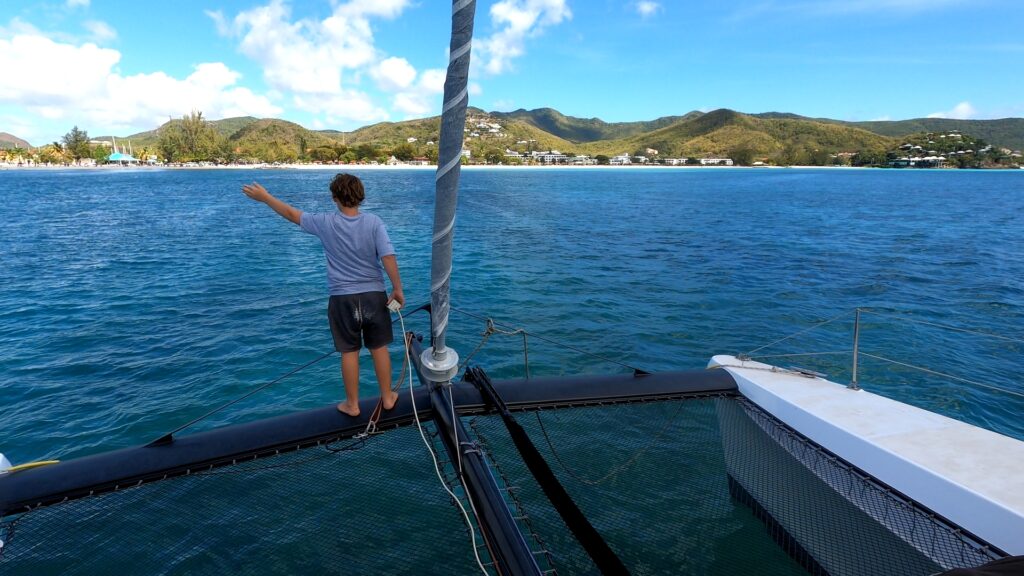
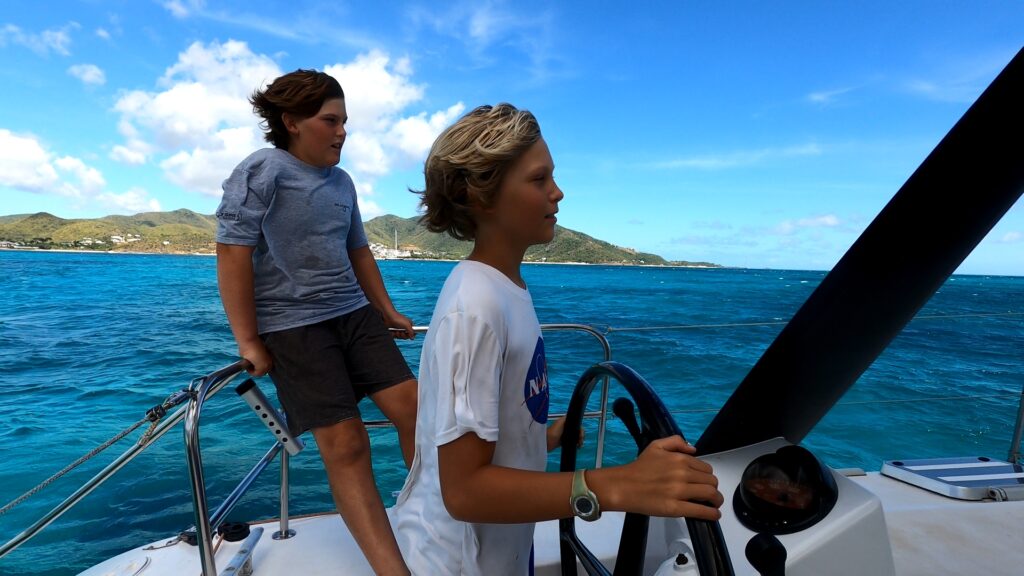
In a crowded anchorage, with second reef in and one rudder, sailing off the anchor is not a casual exercise. You need everyone doing exactly the right thing at exactly the right time. Harrison was on the anchor windlass, keeping tension on the chain as we began to move. Anna and Olly were on the jib sheets — on a boat this size, the headsail is a primary steering tool, not a secondary one. Ayden was on the aft beam with the main sheet, ready to round us up if needed. Shayne was on the helm, managing what steering authority we had.
It worked. Clean departure, no engines, no drama. Passengers don’t do that.
The Sail North
The beat up the coast was 25-28 knots of trade wind, which in the Caribbean means every day of the week in one direction and no let-up. We were reefed down — second reef, jib half rolled, keeping the load off the batten receptacles which were already giving us trouble — and Paikea was moving well regardless. Eight, nine knots upwind on one rudder. Not bad for a boat that was technically compromised.
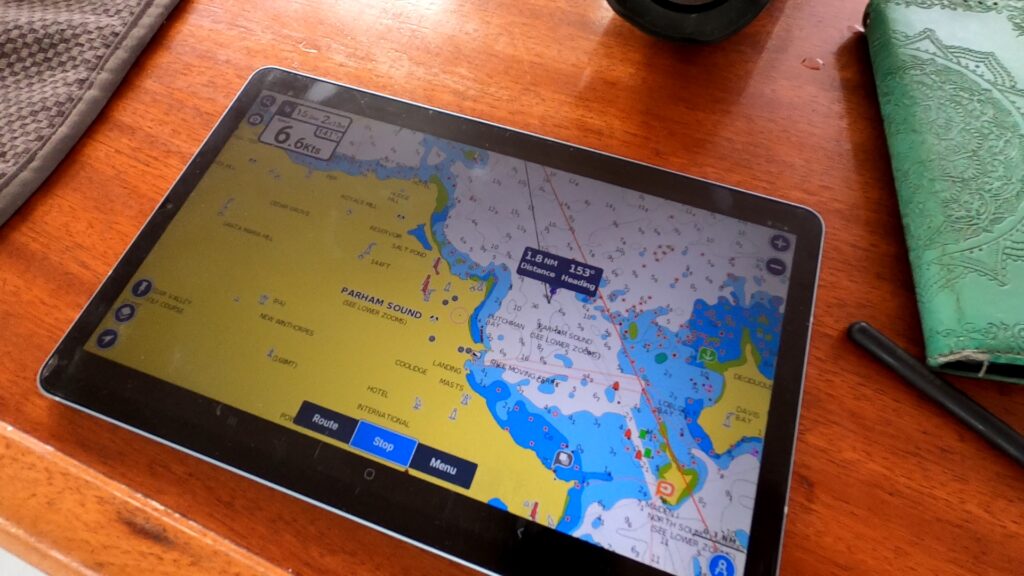
Olly navigated the final approach through the channel — chartplotter, calling course corrections, talking us through the tacks. He’s not a passenger either.
What We Found
Nothing.
The authorities had already cleared the wrecks. Whatever hurricane damage had been sitting up there — whatever graveyard of abandoned boats we’d heard about — was gone. Cleaned up, removed, dealt with. We sailed into the marina, had a look around, and sailed back out again.
Two months of hearing about these boats. A full day’s sail on a compromised rig in 28 knots. And nothing to show for it except a good passage and the knowledge that this particular option was definitively off the table.
We weren’t going to find a rudder. We were going to have to build one.
What Came Next
That decision — to build rather than scavenge — turned out to be the right one in every respect. The rudder we built in Martinique, at anchor, from carbon stocks sourced from C-Tech New Zealand via Antigua, using foam from Wind in Martinique, is still on Paikea. And the design Shayne developed from everything we’d learned across four years of sailing on imperfect rudders is better than anything we would have bolted on from a wreck.
For the complete picture of everything that happened with Paikea’s rudders, from the original failure to where we are now, start here: Paikea’s Rudders: The Full Story
If you want to go deeper into our Paikea Rudder project visit our members the Rudder Design & Evolution — Technical Deep Dive.