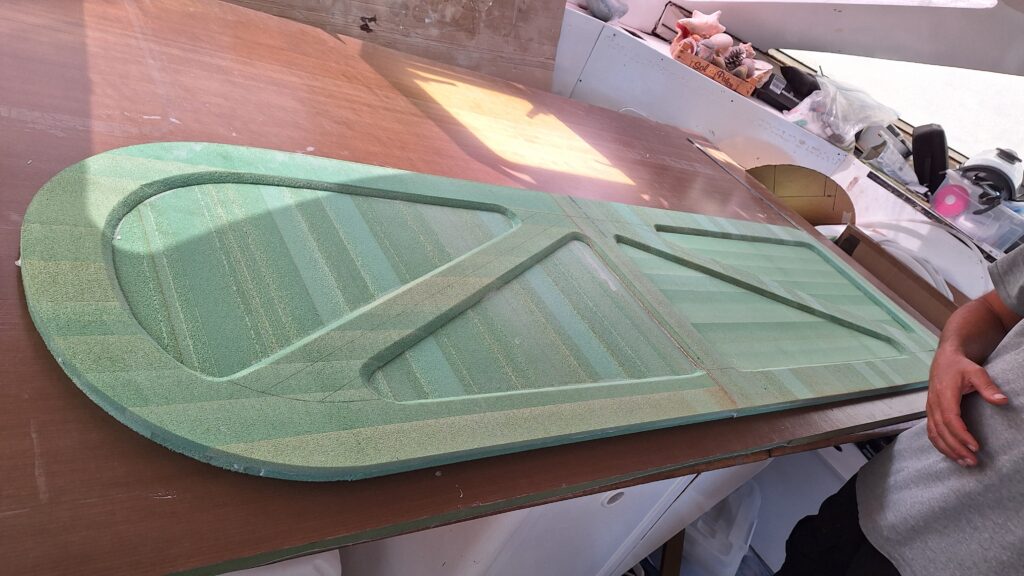
Paikea’s Doors: Building Lightweight Composite Doors from Scratch
There’s a persistent myth in boatbuilding that materials rank on a single ladder — carbon above fibreglass, fibreglass above wood, as if one material is simply better than another regardless of the job. It isn’t true, and Paikea’s doors are a genuinely good example of why: the case for composite over the original timber wasn’t “composite is superior,” it was that composite was the fit-for-purpose choice for this particular job, on this particular boat.
This sits under the wider Interior Refit story — for the full weight-loss picture across floors, bulkheads, furniture, and doors together, see Paikea’s Interior Refit.
The Build Series
Composite vs. Wooden Doors: Why Fit-for-Purpose Beats “Best” Material The materials philosophy behind switching Paikea’s doors from timber to composite, and the weight point that makes the case on its own — before-and-after numbers that are hard to argue with.
Building a Lightweight Composite Door: A Complex-Geometry Lamination Story The lamination technique behind the “spaceship door” — a genuinely complex piece of geometry to laminate cleanly, and the 350 grams saved that made the effort worth it.
Fitting the Engine Room Door — and Why Flow Coat Isn’t Just Paint The last of the interior doors, fitted alongside a proper explanation of what flow coat actually does chemically compared to gelcoat — plus a hydraulic steering system diagnosis found along the way.
In the Members Library
The full mould-making and lamination process behind each door, plus the fit-and-finish details that don’t make it into the free posts, are covered in more depth in the members’ technical library. Join here.
More on doors can be found in our free resources pages. See why properly engineered hull stiffness means doors and lockers should never jam underway, even in genuinely rough conditions. Boat Door Design: What a Gunboat 68 Gets Right.