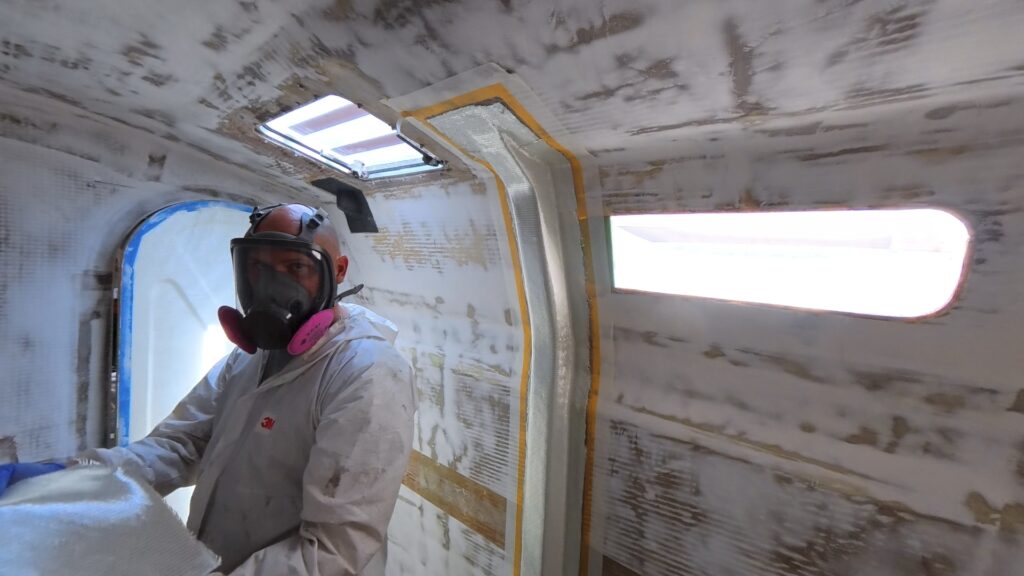
Box Beam Build: Vacuum Infusion, Implosion, and Repair
A hull panel on Paikea needed proper support where an old, half-finished bulkhead used to be. The fix was a structural box beam — hollow, recycled foam core, infused in one hit with the unidirectional glass tying it into the hull and deck. It’s a good example of the kind of build decision that runs through this whole boat: light, cheap, and fit for exactly the job it needs to do, no more and no less.
It’s also the build where an infusion imploded halfway through, and the repair that brought it back stronger than the original plan. Both halves of that story are worth having on record, because the reasoning behind the choices matters as much as the outcome — and because the difference between a costly week and a manageable one came down to diagnosis, not luck.
The Build Series
Part 1 — Building a Structural Box Beam for Paikea’s Hull Why this panel needed support in the first place, the case for a box beam over a full-length longitudinal, and the reasoning behind using a recycled, furniture-grade foam core in a structurally loaded component. Ends where the infusion goes wrong.
Part 2 — Why Did the Box Beam Implode? Your Questions Answered A direct run through the questions this build raised — hollow vs solid, bladder bags, foam density limits, why XPS and expanding foams have no place on a polyester boat, and why a box beam won out over a lighter I-beam once you factor in living with the finished part.
Part 3 — Fixing a Vacuum Infusion Implosion: The Repair The diagnosis of exactly where and why the beam failed, the heat-gun process used to reshape the collapsed foam back into position, and the re-infusion that finished the job — this time airtight, and about 100g heavier than the original plan for a beam that’s stronger than it needed to be.
What This Build Is Really About
None of this is really about one box beam. It’s about how to think through a composite build: matching a material to what a component actually needs to do, understanding the failure modes of the process you’ve chosen before you start, and knowing how to read a failure once it happens rather than guessing at it. An implosion under vacuum and a foam crush look similar from the outside and come from completely different causes — get that diagnosis wrong and a repair won’t hold.
In the Members Library
For more composite engineering deep dives like this one, visit our members page.