Introduction: Uncovering a Hidden Failure
1. The Damage: A Fist-Sized Hole and Rotten Core
2. The Correct Repair: Tapering, Core Replacement, and Strategic Lamination
3. Composite Theory: Woven vs. Stitched Fabrics
Conclusion: Learning from the Past to Build for the Future
Want to Learn More?
Follow our Rudder Upgrades
From makeshift molds from an America’s Cup Yacht Rudder to our own efficient design. See the evolution of our rudders on Paikea with these blog posts.
- Hull Surgery: Uncovering the Truth Behind a Major Rudder Impact
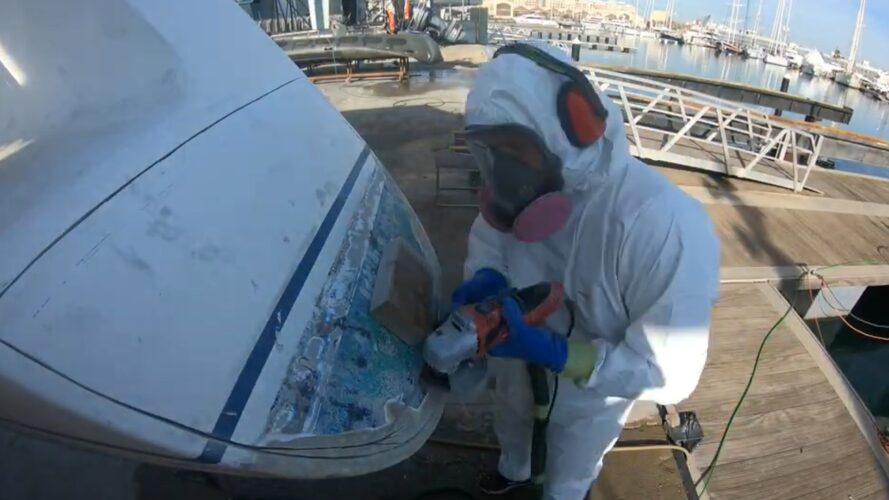
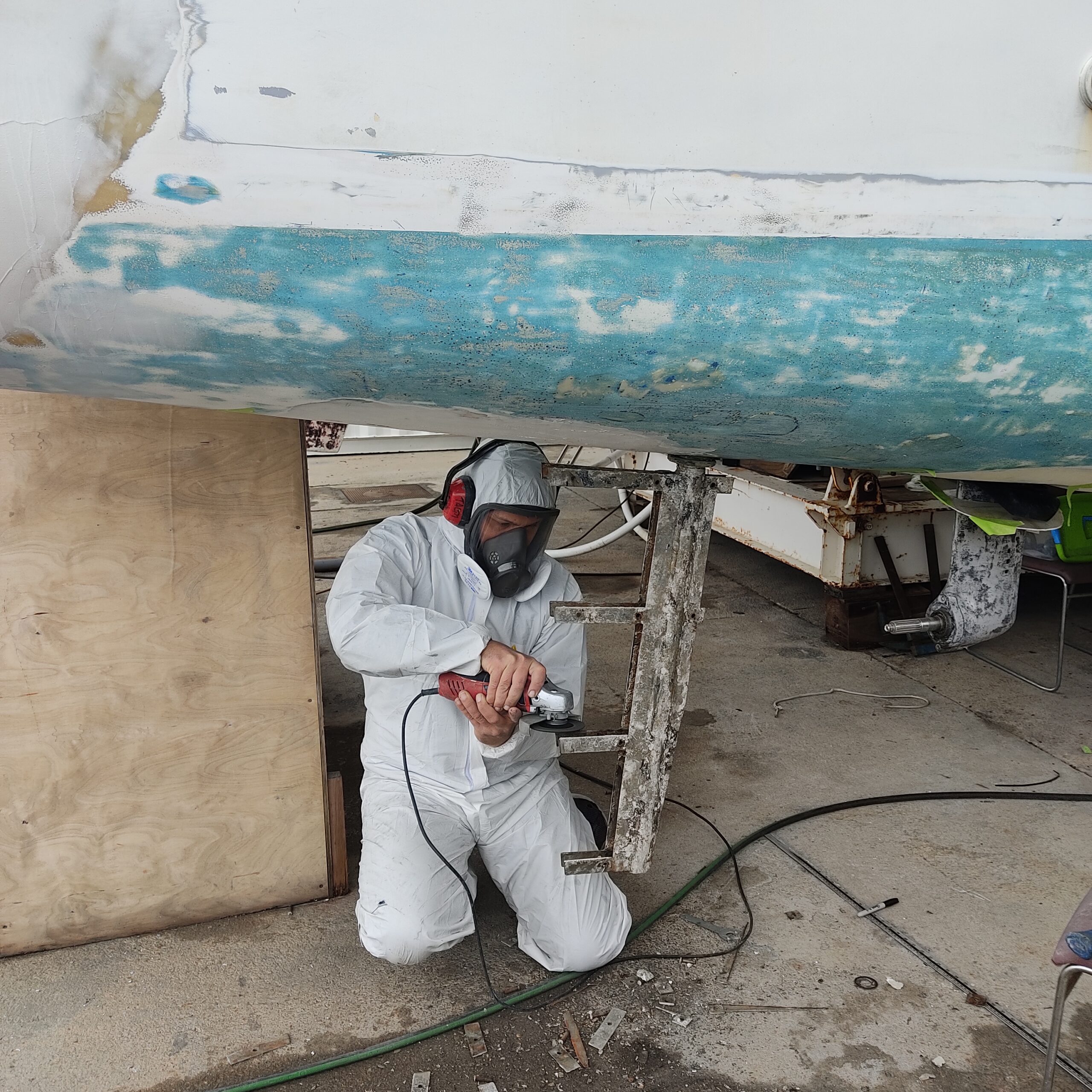
 Key Message: A proper repair requires understanding the original failure. By grinding back a poor previous fix, we uncovered the full story of a major grounding and executed a permanent, structural solution that also informs our future rudder design. Author: Shayne & Anna Introduction: Uncovering a Hidden Failure During our refit, a small, suspicious repair above… Read more: Hull Surgery: Uncovering the Truth Behind a Major Rudder Impact
 - Major Hull Surgery: Transom Modifications, Fairing, and Sourcing an America’s Cup Rudder
 Executing multiple complex hull projects with a focus on structural integrity and performance gains. Author: Shayne & Anna Key Message: A systematic, professional approach allows multiple major refit projects to be run in parallel, turning a daunting workload into a series of manageable, high-impact upgrades. Introduction Transforming a boat’s hull lines is one of the most ambitious… Read more: Major Hull Surgery: Transom Modifications, Fairing, and Sourcing an America’s Cup Rudder
 - Building Rudders Designed for Wings: An America’s Cup Inspired ProjectLeveraging professional-grade components and techniques to fabricate high-performance rudders on a cruiser’s budget. Key Message: True innovation in a refit often comes from creatively repurposing existing high-performance technology and combining it with meticulous, professional fabrication techniques. Author: Shayne & Anna Introduction Replacing Paikea’s non-original and failing rudders was a top priority. While designing from scratch was an… Read more: Building Rudders Designed for Wings: An America’s Cup Inspired Project
- The Pre-Splash Push: Integrating Engine Work, Composite Rudder Mods, and Custom FairingsKey Topic: Facing a firm launch deadline, we executed a coordinated final push on our catamaran’s critical systems. This involved servicing the saildrives, preparing new rudders for future winglets by installing a carbon rod backbone, and fabricating custom fairings to improve hull hydrodynamics. With a focus on engineering robust solutions—from reinforcing foils to managing a… Read more: The Pre-Splash Push: Integrating Engine Work, Composite Rudder Mods, and Custom Fairings
- Crisis at Sea: How We Managed Losing a Rudder 800nm From LandKey Message: This post details the immediate response to losing a rudder offshore, covering crisis leadership, technical diagnosis using onboard instrumentation, and the strategic decisions that ensured a safe passage to land. Author: Shayne & Anna The moment of truth in any offshore passage comes not when things are going well, but when they go wrong.… Read more: Crisis at Sea: How We Managed Losing a Rudder 800nm From Land